Syrian Refugees
In today’s local newspaper this was published on the editorial page. The author is Ronald Stephens, a member of Hendersonville’s city council. My response to the author follows.
###########################
In a Times-News editorial (Sunday, July 3), the headline admonished “Get the facts before reacting,” referring to my comments on hearing that St. James Episcopal Church is exploring the possibility of hosting Middle Eastern refugees in Hendersonville.
I had said in a television interview that I was concerned that St. James’ activities could open the door for Syrian refugees to be housed here.
The editorial did not tell the whole story, and it failed to support the conclusion it insinuated — that those speaking against what St. James is considering have a “witch-hunt mentality.” That’s untrue, and I applaud those in our community who are speaking out on this matter. Opinions I’ve received through social media, phone calls and in person are thoughtful and heartfelt.
Perhaps an article about “getting the facts before making a decision on bringing Middle Eastern refugees here” might be in order.
• Fact 1: Mayor Barbara Volk indicated our concerns were “overblown” because it would take a long time for St. James’ plan to come to fruition. But that doesn’t mean a plan isn’t going forward.
Overcoming the one hindrance cited — Hendersonville’s distance from an approved resettlement office — is exactly what is being considered. In a June 23 email, Mayor Volk said: “… They (St. James) are applying, through the Episcopal Church, to be a refugee resettlement agency.”
• Fact 2: There is good reason to believe that the refugees St. James would host would be Syrian.
Among print materials Mayor Volk received from St. James were two articles specifically referring to Syrian refugees: “Syrian Refugees Don’t Pose a Serious Security Threat,” published by the Cato Institute, and “Myths and Facts: Resettling Syrian Refugees,” from the U.S. Department of State.
• Fact 3: Notwithstanding those two articles, there is serious concern that Syrian refugees cannot be properly vetted.
On Nov. 17, 2015, the Washington Post reported in part:
“FBI Director James Comey (said) in congressional testimony last month that ‘a number of people who were of serious concern’ slipped through the screening of Iraq War refugees … . ‘There’s no doubt that was the product of a less than excellent vetting,’ ” he said.
“Although Comey said the process has since ‘improved dramatically,’ Syrian refugees will be even harder to check because, unlike in Iraq, U.S. soldiers have not been on the ground collecting information on the local population. ‘If we don’t know much about somebody, there won’t be anything in our data,’ he said. ‘I can’t sit here and offer anybody an absolute assurance that there’s no risk associated with this.’ ”
• Fact 4: Not being able to properly vet refugees increases the risk of bringing in potential terrorists.
It is reported that in the past fiscal year, 1,682 Syrian refugees were admitted to the U.S., and roughly 23 percent were adult males (U.S. Department of State: “Myths and Facts: Resettling Syrian Refugees”). That may seem like a low percentage, but applying it to President Barack Obama’s goal of admitting 10,000 this fiscal year, we’d be admitting 2,300 men.
• Fact 5: It is unlikely that bringing refugees here is the best means of helping them.
In “The High Cost of Resettling Middle Eastern Refugees” (November 2015), the Center for Immigration Studies stated that resettlement in the United States for one Middle Eastern refugee costs American taxpayers an estimated $64,370 over the first five years, 12 times the U.N. estimate for caring for one refugee in a neighboring Middle Eastern country.
Dr. Steven Camarota, the center’s director of research and lead author of the report, commented, “Given limited funds, the high cost of resettling refugees in the United States means that providing for them in neighboring countries in the Middle East is more cost-effective, allowing us to help more people.”
• Fact 6: In today’s environment, with people understandably concerned with matters of security, the question should be asked: Is helping refugees more important than helping with the needs of our community, i.e., homeless children, fallout from domestic violence, adequate/affordable housing, meaningful employment, to name just a few?
The refugees’ plight is terrible, but there are real hardships here just as worthy of concern. No doubt the people at St. James are honestly seeking to help with a serious problem, but I don’t believe it is witch-hunting to suggest that there may be safer and more cost-effective ways to apply our time and treasure.
###################################
Mr. Stephens
Your column in today’s T-N reminded me immediately of Richard Nixon’s maiden speech to Congress in 1947. It was nominally about one individual but the context was the common suspicion that European refugees MIGHT be communists and therefore visas should not be issued for them to come here as refugees. This was two years after Ike had films made at the newly liberated concentration camps for newsreels shown in almost every movie theater in America. Everyone knew the truth about who these refugees were.
It reminds me of Breckenridge Long, a member of FDR’s administration before and during World War II and was in charge of immigration. He did everything he could to obstruct Jewish refugees from coming here because, he said, some of them might be German agents. He justified this in his diary by referencing the contemporary strict laws in the United States imposing quotas on the number of immigrants from particular countries, and his great concern about the possibility that Germany and the Soviet Union would introduce spies or subversive agents into the United States amidst the large numbers of refugees.
I wonder how many Jewish lives would have been saved if it were not for this hostility based on appeals to reason and security.
It reminds me of a dark side in American history going back to the Alien and Sedition Acts of 1798. It reminds me of a history of legislation, political demagoguery, and mob violence against immigrants ever since then.
You are no different from them.
The Syrian civil war, ISIS, and the rise of Iran are all direct results of our invasion of Iraq in 2003, a predictable result, by the way. This is a mess we made and which will trouble the region for some time to come. The Muslim countries in the region have taken in hundreds of thousands of refugees. Those countries, including Turkey, Jordan, and Iraq, are overwhelmed. There are 7.6 million refugees still within Syria and 4.1 million in neighboring countries. Europe has taken in 348,000. According to your essay we have taken in 1682 in the last fiscal year.
After the Viet Nam War we took in about 800,000 Vietnamese refugees and have taken in millions since. There might have been security concerns, but those were set aside because of the human crisis which was largely our creation and our responsibility.
Your “facts” are taken from The Center for Immigration Studies, which has been cited as a nativist hate group by the Southern Poverty Law Center. This organization is biased and not reliable, yet you cite them as authoritative.
This again places you on that dark side of American history.
This is not about political parties or ideologies. It is about morality. St. James congregation is answering the call of our faith traditions, which is very much founded on people taking care of each other including strangers and including even enemies.
Frankly, Mr. Stephens, I would rather have a family of refugees living next door than someone like you. The immigrant families I have had as neighbors appreciated and loved this country for accepting them. I think you take it for granted not recognizing what makes America something special in human history.
L’shalom
Rabbi Philip J Bentley
PS When I sign as “Rabbi” I am writing as a member of the clergy, not just as a citizen.
PPS I hope you will respond to this letter and in a civil manner. I have tried to be civil about something that is deeply disturbing to me.
PPPS Without doubt you are familiar with the following poem. You may not realize it was written by a young aristocratic Jewish-American woman on seeing the conditions of immigrants arriving in New York.
The New Colossus
Not like the brazen giant of Greek fame,
With conquering limbs astride from land to land;
Here at our sea-washed, sunset gates shall stand
A mighty woman with a torch, whose flame
Is the imprisoned lightning, and her name
Mother of Exiles. From her beacon-hand
Glows world-wide welcome; her mild eyes command
The air-bridged harbor that twin cities frame.
“Keep ancient lands, your storied pomp!” cries she
With silent lips. “Give me your tired, your poor,
Your huddled masses yearning to breathe free,
The wretched refuse of your teeming shore.
Send these, the homeless, tempest-tost to me,
I lift my lamp beside the golden door
Abraham’s Legacy Tour
I have wanted, for a long time, to lead an interfaith tour of Israel and Palestine. Now I have that opportunity. I discovered MEJDI tours which specializes in this kind of event.
Here is a description of this tour from its web page.
Abraham is the spiritual ancestor of Judaism, Christianity, a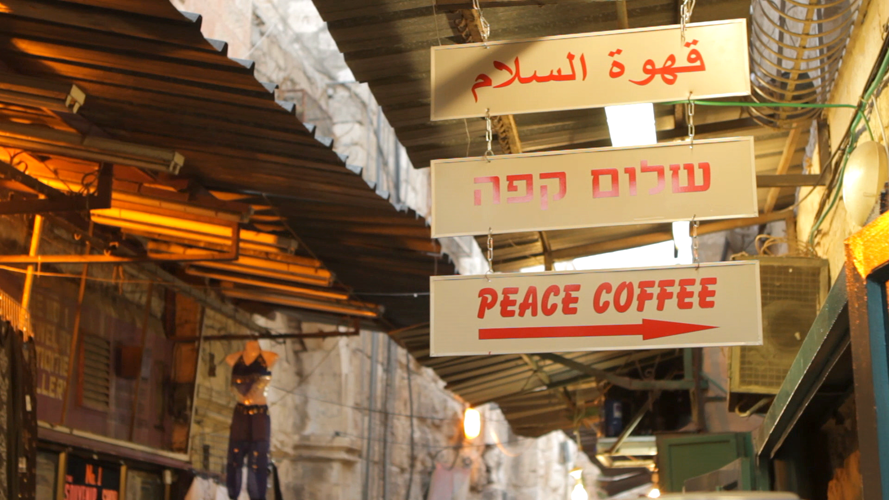 nd Islam including all their varieties and off-shoots. Nowhere in the world is this more clear than in The Land of Israel. This tour not only takes us to historic places but will bring us together with people of all three faith traditions and those who do the work of bringing together communities of the three Abrahamic faiths.
This tour will provide a fresh vision of the Holy Land. Led by two guides, an Israeli and a Palestinian, we will visit communities, holy places, and homes of three faiths. We will have opportunities to meet with many kinds of people and break bread w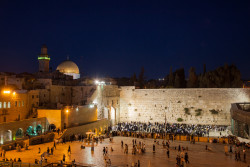 ith them while learning about their lives. Whether this is your first visit or your tenth, we are offering an experience that will both teach and inspire. Travelers who are seeking to understand this common heritage in all of its variety will find this tour an informative and exciting experience.
The site is at https://www.mejditours.com/open-tour/abrahams-legacy-tour/
Having been to Israel many times I have learned that just sight-seeing is not going to a traveler a good knowledge of that state. The same goes for Palestine. The best tours are those that provide opportunities to meet the people there.
By the way, the more people who sign on, the less the per person cost will be.
If you know people who might be interested, please pass this on to them.
Survey from Looking at Zion
This project sent me a survey asking my opinions on Israel-Diaspora relations. This is a subject I have long been interested in. Here are the questions and my responses.
The World of Jesus of Nazareth
[This is a new kind of presentation for me and I hope I get this right]
A local church asked me to give a lecture series on the world that Jesus was a part of. I had two purposes. The first was to give historical background to the Gospels (especially the three synoptic Gospels – Matthew, Mark, and Luke). This will help Christians reading their scripture a clearer sense of the reality of the people, time, and place of these books. The second is to dispel the anti-Jewish aspects of these Gospels and to explain how such passages became official Christian scriptures. My talks were about Jesus the human person, not the theological figure. Christian doctrine about Jesus is that he was both human and divine. I spoke only of the human side. I do not see this as affecting the theology at all.
There were four lectures. For each of the lectures I used, for the first time, Power Point slide shows. Each audio file is followed by the slide series for each lecture.
The first lecture is a survey of Jewish history from the death of Alexander The Great until the takeover of Judea by the Romans. From beginning to end it was a period of conflict among Jews. There was the matter of how much of Hellenism to adopt. At one extreme were the wealthy and aristocratic (including the Kohanim/Priests) who went to great lengths to acculturate to Greek ways. At the other were the Hasidim (not those Hasidim) who wanted to preserve the old traditions and rejected this newfangled civilization that now surrounded them. This is what the famous revolt of the Maccabees was about. Because the Seleucid emperor wanted everyone under his rule to assimilate, he suppressed local traditions. The Jewish revolt succeeded and the priestly family that led it, the Hasmoneans, became the High Priest (who served as a national leader) and then also the king. These kings were all tyrants, except for their one queen Salome Alexandra. There was a party, known as the Scribes, who protested the Hasmoneans and suffered horribly at their hands for it. Eventually a series of civil wars between Hasmonean rivals created an opening for Rome which took Judea as part of its empire.
The second lecture is about the four schools or four parties that arose during the period of the first lecture and into the lifetime of Jesus. They were
1 – The Saducees (from the Hebrew TZadokim) who were the priests and aristocracy. They maintained the Temple in Jerusalem as the focal point of Jewish tradition and they claimed to represent tradition. They believed only in the written law, i.e., the Torah, and denied the existence of an Oral Torah.
2 – The Pharisees (Protesters or even protestants) who believed and taught that when Moses received the Torah he also received the Oral Torah which is the actual set of rules and principles by which Jews should live. They taught that there is a life after death in which reward and punishment are meted out. This was a new idea which is not found in the Jewish scriptures. They argued and taught about the rules by which Jews should live according to the Oral Torah.
3 – The Zealots – This was a party of violent revolutionaries who fought the Romans and those Jews who collaborated with the Romans (the Saducees). The theives (or robbers or bandits depending on the translation) of the Gospels were Zealots not common criminals. This party had its origins in the Galilee.
4 – The Essenes – We know very little about this group except from the reports of Josephus and Philo Judaeus. It is not certain that the Qumran community which produced the Dead Sea Scrolls were or were not Essenes. What we know of them is that they believed the Apocalypse (the End of Days) was coming soon and they had to separate themselves from the other three groups and the Romans to prepare.
So where did Jesus fit into this picture? That was the subject of the third lecture. It seems to me that Jesus had to be a Pharisee. In the third lecture I presented sayings of Jesus from the Gospels and also parallel rabbinic texts (the Scribes became the Pharisees and they became the Rabbis after the Romans destroyed the Temple in Jerusalem). Jesus argued with the Pharisees but my reading is that he argued with them as one of them about subjects that often were not settled for some time afterwards.
Part of this lecture was about the Good Samaritan. Who were the Samaritans? The short version is they were a people who believed they were the real Jews (they still do) and they were looked down upon by the Jews of the time. The slide show gives the Jewish context of the story. Making the Samaritan the good guy in the story and the priest and Levite the bad guys was very significant. This is an example of Jesus going against the Saducees and saying even the Samaritans were better than they. I also included the quote about rendering unto Caesar the things that are Caesars because that has very great significance in this reading of the Gospels.
The fourth lecture was one I was nervous about. In it I was to show that the trial of Jesus was not a real trial and that Caiphas, the High Priest, was basically a Roman official. Jesus’ behavior in Jerusalem at Passover time was frightening to the Romans and the Saducees, especially overturning the money-changers’ tables. In the slide show you will see the context. The depiction of Pontius Pilate in the Gospels is utterly opposite the character of the historical person. Pilate is presented as reasonable and forgiving. He actually crucified thousands of Jews during his ten years as Procurator (Governor). Claiming messiahship was tantamount to declaring oneself king and only the Emperor had that authority. The penalty was crucifixion, a torturous death reserved for enemies of the Empire. I note that who was responsible for Jesus’ crucifixion has no bearing on the theological meaning of the crucifixion.
I hope posting all of this on my blog will be of interest to my readers.
I will try to remember to post more often…
Three Faiths in One
The following is in response to a post from my friend Tony. We were talking about Zorba (the film, which he had just seen for the first time). We have discussed the natures of Christianity and Islam. My latest post to him reflects my current thinking.
Hi Tony
By the end of the first century there were already over a dozen versions of Christianity. Most of the differences were on two issues – the nature of Jesus (divine and human, only divine, only human, etc.) and the relationship with the OT in the new faith (all of it, selected parts of it, none of it, etc.). Gnosticism was an important element in bringing Christianity into the pagan world as were the mystery religions. Syncretism (adapting other faith systems, customs and symbols into Christianity) goes on to the present day. The Gnostic influence is the basis for Christianity’s dark view of this world, such as original sin. Trinity is a concept developed over two centuries following the establishment of the NT canon. I have read some of that literature including Augustine’s long essay on the subject. It is still a doctrine that leaves some theologians discomforted. I understand it as a way of seeing the theological problem of God’s connection to this world – Father is transcendent and distant; son is immanent and close; Holy Spirit is the connector. This same set of ideas is present in both Judaism and Islam, along with the problems and issues connected (for example theodicy, the problem of divine justice). Decades of study and experience have shown me that the three Faith’s are really three faces of one faith. All the conflicts among them and within them are not really about faith no matter how much faith is used to promote and justify them. The only reason, I believe, that this does not happen for Jews is we are so few in numbers. Our own sources say there is nothing intrinsic about us that is better than other peoples. God chose us to play a role in human history and much of the time we might wish, as Tevye says in “Fiddler,”. “Can’t you choose someone else for a change?” I am very proud to be a Jew because of all the good we have done in our assigned role (which I think includes the creation of both Christianity and Islam), but that does not mean I feel superior. It just means I have burdens of responsibility to teach and promote a way for people to be good to each other. My political and social views come from that place.
On vacation my mind seems to open up. I think I may post this message on my blog…
Another Reason to Support The Iran Agreement
The biggest objection to the Iran Agreement on nuclear weapons is that Iran cannot be trusted to abide by it. I disagree. My training and experience in negotiations and in conflict resolution have shown me that anyone can be trusted to do what they believe benefits them. This is true whether among individuals or on any size group including nations. Look at this agreement with that in mind.
The true measure of the Iran agreement is the extent to which everyone gets what they need or see themselves as needing. (As the Stones sing it, “you can’t always get what you want,but if you try sometimes you might find you get what you need.”). We need for Iran not to get the bomb which is also what the other five on our side plus IAEA need. what Iran needs is an end to the sanctions. The question raised by critics of the agreement ask whether Iran can be trusted to comply with the agreement. Which does Iran need more, a strong economy or a nuclear arsenal?
Here is a thought that came to me which I have not seen in any source. Iran needs for their economy to work more than they need nukes. They seek regional hegemony. No power can have that without a healthy economy. Can anyone think of any great power in human history that did not have a strong economy? Iran cannot afford continued sanctions. If the agreement falls through because of American politics the USA will lose credibility with our five co- negotiators and also the sanctions will collapse because four of the other five need Iranian oil. The fifth, Russia, will have been handed a bigger relationship with Iran which they have sought for a very long time and which they are now actively pursuing.
Furthermore the Islamic rulers of Iran are very much aware that they came to power through the overthrow of the Shah which, before 1979, no one thought could happen. The immense Green movement that opposed Ahmadinejad’s re-election is still functioning and still actively opposing the regime. It is secularist and committed to non-violence and is exactly the kind of movement that has a history of bringing down tyrannies. The regime knows that the weak economy due to the sanctions is a basis for widespread opposition, too big for them to suppress. The regime needs to fix the economy more than it needs nukes.
The agreement gives everyone what they need, if not everything they want. That is how negotiations work.
Still So Far to Go
i am visiting New York where I am staying with my son, Josh, at his apartment in Harlem. This morning I went across the street to get a coffee at Starbuck’s. Just ahead of me in line was a lesbian couple, one African-American and the other Latina-American clearly behaving like a couple. Let’s parse this.
1 – My son has an apartment in Harlem.
2 – There is a Starbuck’s across the street.
3 – an openly lesbian inter-racial couple
Not so long ago none of this would have been possible. Harlem was a largely Jewish area of the City a long time ago, but the Harlem of my lifetime used to be a racial enclave known for urban blight and violence. A business like Starbuck’s would never have opened here. Until not so long ago most GLBT people stayed in the closet and certainly were not openly affectionate in public. Inter- racial couples were not often seen, especially homosexual couples.
My first thought was that all the activism of the past sixty years has achieved a great deal. I felt everything I have done has borne fruit. The harassment and abuse I have suffered, especially speaking out from the pulpit, has been worth it.
Then I looked at the morning paper and realized how far there is to go. A U. Of Cincinatti campus cop has been indicted for murdering a motorist stopped for a missing license plate. A black woman died after three days in jail in a Texas county with a history of racist violence. Her offense was failing to use a turn signal when she changed lanes. True, she did Not behave wisely when stopped but a policeman is supposed to be a professional and should have been trained in calming people down in tense situations. I have not only observed policemen in New York and in my small town of Hendersonville doing just that, but I was trained by the NYPD to intervene when observing bad behavior on a policeman’s part (I am using a gender-specific term but am referring to anyone of either gender wearing a badge and I should not have to say that). Racism is still a big problem despite the great progress and despite the denials of conservatives. There is still much to do, which is why I am active with Moral Mondays.
I have been active in environmental concerns for almost half a century and now see legislatures rolling back essential regulations to please their corporate sponsors, the ones that pay for their electoral campaigns. The Senate has put that ignorant clodhoppers, James Inhofe, in charge of climate change issues. Despite a great deal of progress in that area there is not only a long way to go, but it is necessary to oppose those who seek to go backwards.
Nuclear proliferation has largely ended with no new members of the nuclear cllub except North Korea for some time. Throughout the history of nuclear arms there have been negotiations towards arms limitations treaties. Many believe Iran is working towards becoming a member of that club and there has been concern about this for about a quarter century. Now an agreement has been negotiated which will deny Iran the possibility of going nuclear and this entirecdeal is endangered by Congress. I have read and heard the objections and none of them convince me of anything except political grandstanding. That goes double for Israel’s demagogic Prime Minister Bibi Netsnyaho who has been beating that drum since 1992.
A couple of weeks ago I joined the Moral Monday rally in Winston-Salem protesting our state’s voter suppression law. I marched for voting rights in Selma. Why do I still have to march for voting rights?
I could go on and on about what still needs doing. I would love to enjoy a retirement of study, friendship, and enjoyment of my life. I intend to do those things, but I cannot spend all of my time and energy on those things. There is still too much that needs to be done to fix the world.
As Rabbi Tarfon said, “you are not required to complete the task, but neither are you free to desist from the work.”
Walking in Selma Then and Now
“I felt as if my legs were praying.” This is what Dr. King’s friend Rabbi Abraham Joshua Heschel said about his experience at the 1965 march in Selma. I know just what he meant. This was not just a political event but a spiritual one, a pilgrimage. The same was true this year when I returned to Selma to join the 50th anniversary march there.
There were important differences this time. Back then marchers were faced with open hostility and death threats. This time there was no fear and no confrontations. Back then we knew what we were doing was important, but we could not know that Selma would become a symbol. We were demonstrating our support for the right to vote. That right is a constitutional right and the basis for all our other civil rights. Back then this right was being denied to people on the basis of race. The government of Alabama held onto power through intimidation, unfair legal practices, violence, and murder. The Selma march succeeded in pushing the President and Congress to pass the Voters’ Rights Act of 1965 (VRA).
Today the vote is being suppressed in a more refined manner and race is not the target, or not the only target. In 2013 the Supreme Court decided to gut the VRA taking out the section that had the teeth. Enforcement of the act was ended because, as Chief Justice Roberts wrote in his decision that the law is “based on 40-year old facts having no logical relationship to the present day.” I wonder how it is possible that the Chief Justice of our Supreme Court could be so clueless. Immediately, upon publication of that decision, several states, including North Carolina, proceeded to pass new laws restricting voting rights. No one affected by these laws is fooled about the partisan nature of these laws. In our state alone over 300,000 people are without the necessary documents and for them access to the polls is made difficult and sometimes impossible. As one speaker noted, Jim Crow is now James Crow, Esq. It’s the same thing dressed up in better clothes.
The event I attended in Selma on March 8 was not nostalgic. It was not just about an accomplishment of a past generation. It was an affirmation that, as much progress as there has been, there is still a very long way to go. Even the abuses of legal process and violence against African-Americans are still with us and are currently revealed as being systemic. There is another town, which has become a symbol of racial injustice. As I write this the outrageous miscarriages of justice in Ferguson, Missouri are being revealed along with similar practices in many cities all over our nation.
The first event of the day for me was a church service. I saw there a teenager wearing a t-shirt that said, “UNARMED CIVILIAN.” The family of Michael Brown was seated near the pulpit. The preachers addressed the voting issue but also the police violence issue. This church holds to a very traditional form of Christianity. In fact all the speakers I heard were ministers, mostly Baptist. Even Al Sharpton spoke as a preacher rather than a news commentator. The civil rights movement was always about applying the spirit to life.
The people gathered in Selma were overwhelmingly people of faith. I saw a lot of clerical collars. Buses for church groups were parked everywhere. The spirit was joyful and loving. About 100,000 people marched in a town of 20,000. No one, not even the organizers, expected such a turnout. It took hours to walk the few blocks from Browns Chapel to the other side of the Edmund Pettus Bridge because of the sheer number of people. Yet I saw no sign of anger or frustration in anyone.
The President spoke the day before along with other political figures, none of whom represented the Republican Party. What can we conclude from that absence? Back in 1965 it was Congressional Republicans who pushed the VRA vote over the top. Today none that I know of were present to say that they too endorse the right to vote and oppose racial injustice. I have to ask whether the party leadership understands that many of their members support the right to vote and certainly oppose racial injustice. I cannot believe that this is not so.
The march this year was a portrait of America. There were people of all ages, people of many faiths, people representing communities in every part of the country. I even saw a group of Alabama State Troopers, led by an officer, marching with us. This was our country at its best. This was faith at its best. I think we “foot soldiers” were acting as true patriots calling for the realization of the ideals on which this nation is founded.
I was there in 1965 as a young college student. I was there this year as I approach my 70th birthday. In the years between I have worked for justice, and for peace. Much has been accomplished in those years, but there is still a long way to go. As we sang on the march,
“Ain’t gonna let nobody turn me around. Gonna keep on a-walkin’, gonna keep on a-talking, marchin’ down to freedom land.”
MLK’s World House speech
Many people remember Dr. King as an idealist, but he was very grounded. The film “Selma” (which I highly recommend) begins with MLK dressing for his Nobel prize ceremony. Right there, at the beginning of the movie we see our hero as very human. “Selma” is an amazing film because Hollywood films about the Movement are usually either sentimentalize or have a white hero. “Selma” keeps it real.
MLK’s speech on receiving the Nobel prize was one of his best, known as the World House speech. Here is a link to the text of that speech and a recording of a bit of it. I yield the rest of my time to Dr. King.
http://www.nobelprize.org/nobel_prizes/peace/laureates/1964/king-acceptance_en.html
Morality and American Foreign Policy
Today I received an email with a column that justifies an amoral approach to American foreign policy. You can read it at http://us4.campaign-archive2.com/?u=74786417f9554984d314d06bd&id=31d24b23ae&e=22cd836b7b
Here is my response..
 pearleafblog